Real-Time Studio
Individual coursework for Real-Time Studio. UE5 'Netherworld' Diorama.
Instructor: Nicole Mather
"When there's no one left in the living world who remembers you, you disappear from this world. We call it the final death." Pixar's Coco beautifully visualized this haunting concept of existential erasure through its vibrant Land of the Dead.
Inspired by this philosophy of memory-as-existence and rooted in Chinese underworld mythology, my UE5 diorama seeks to visualize the liminal space where newly departed souls first confront their post-mortem reality – what folklore describes as the "boundary station between yang and yin”.
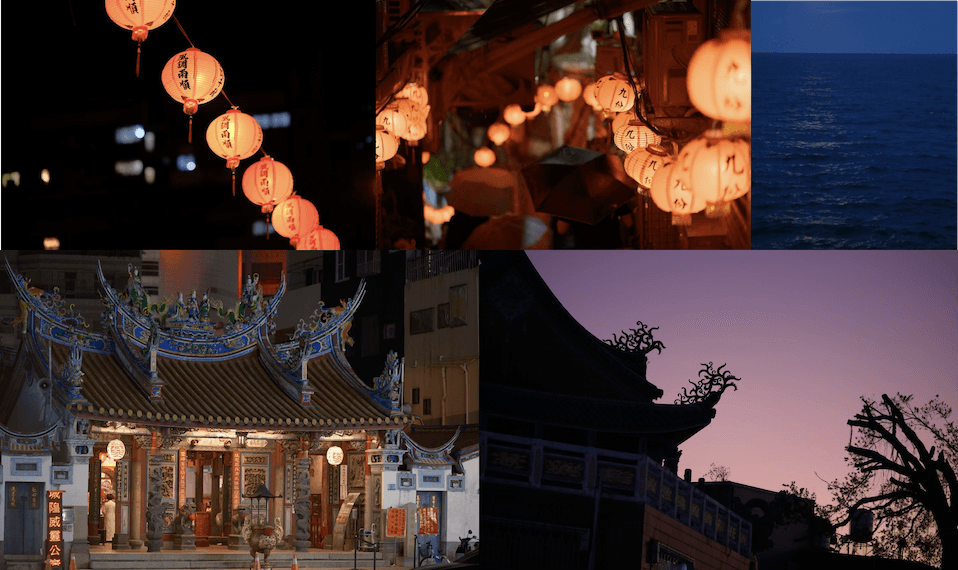
↳ mood board (photographs taken by myself)
⇲ Theme: Fantasy / Mystery
A mysterious yet not overly eerie environment, depicting the “first stop in the underworld” where the protagonist arrives after death, partially based on Chinese folklore.
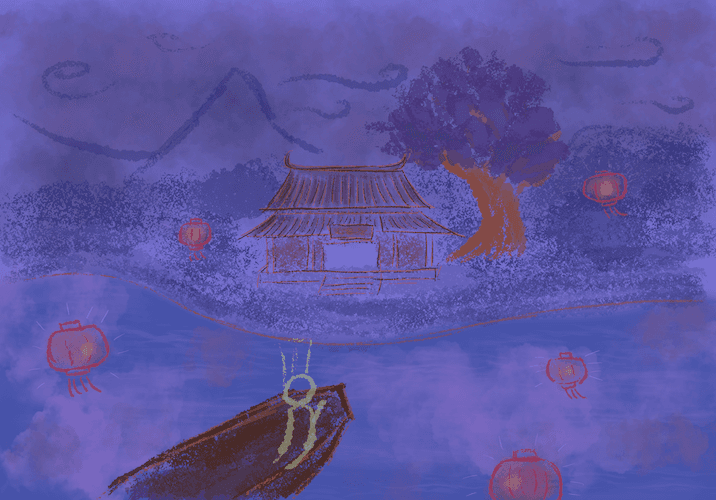
↳ sketch
⇲ Scene Element
‣ A vast water body shrouded in mist
‣ Floating coffin boats carrying spirits
‣ Floating lanterns
‣ A mysterious temple on the distant land
‣ A towering, ancient, and twisted tree
‣ Scattered, withering foliage
‣ Faintly visible mountains in the distance

↳ early stage test scenes
⇲ Early Stage Test Scene
Starting week 3, I began continuously hunting for relevant assets on FAB (e.g., SICKA DYNASTY, Wooden Props Environment Pack) and Quixel Megascans. I also set up some test scenes, but none of them felt quite right. Some were too realistic, while others were too generic.
What I knew I wanted was a more bizarre, dreamlike environment—something that didn’t feel like it belonged to our world, a scene that flickered and shimmered with an almost unreal, ethereal quality. Therefore, I decided to experiment with custom materials in UE to create a visual style that was both strange and captivating. My goal was to make the textures feel otherworldly, flickering like flames, and elusive.
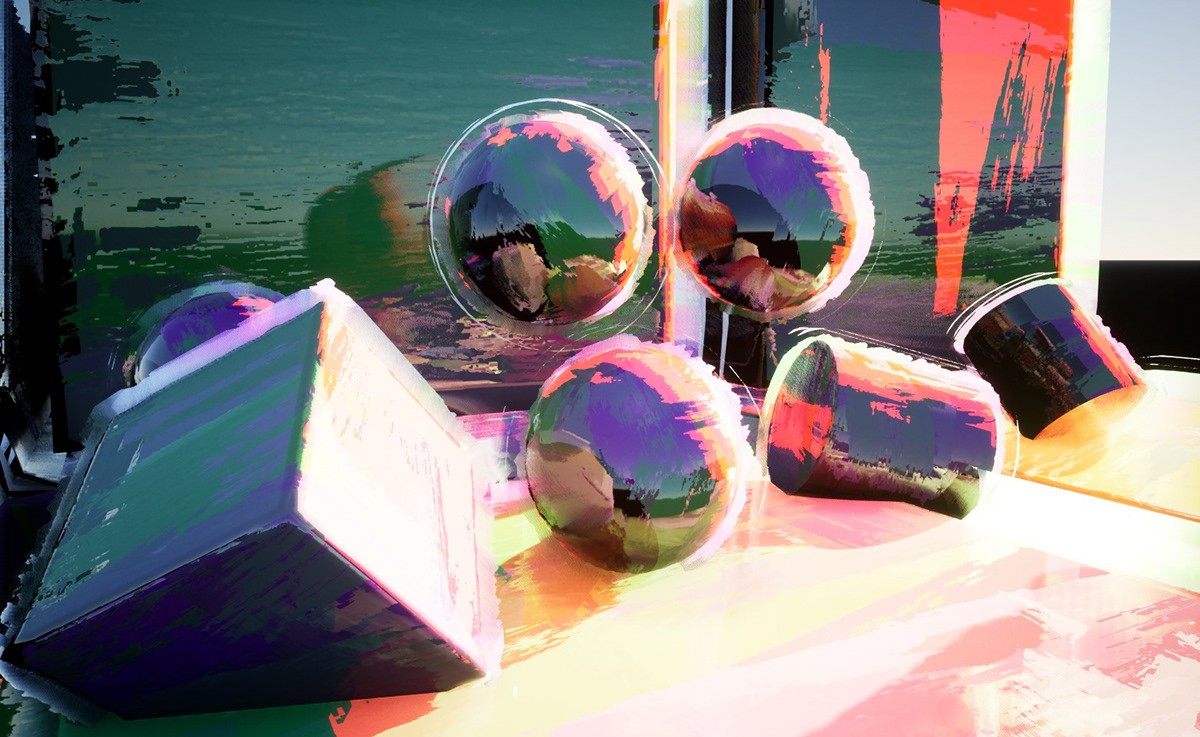
↳ from Gabriel de Laubier’s blog
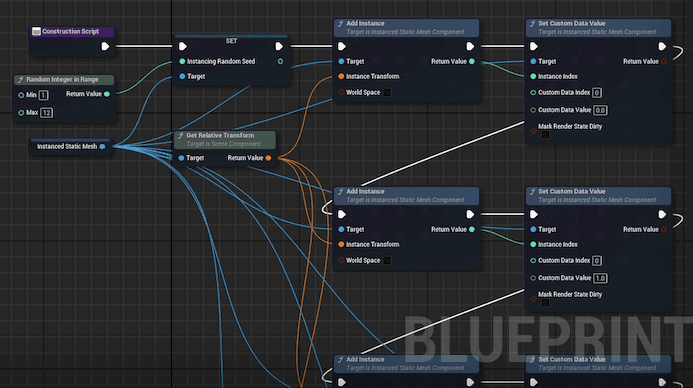
↳ avoiding new draw calls by adding instanced static meshes using blueprint
⇲ Stylized Paint Stroke Shader
After exploring numerous tutorials online, I stumbled upon the Stylized Paint Shader by Gabriel de Laubier. Its final look immediately caught my attention. Following the author’s breakdown blog, I recreated this custom shader in UE, added a trembling effect to the rim protrusion and outlines, and made it capable of lerping between paint strokes and additional textures.
It took me a few days to fully understand it, but through the process, I learned a lot about materials and blueprints in Unreal Engine.
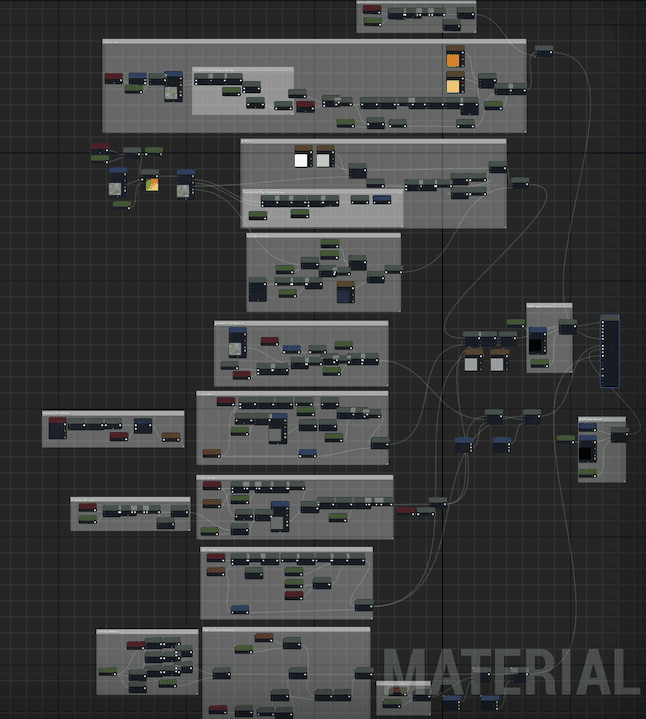
↳ custom shader
⇲ Temple
Besides using assets from FAB, I also modeled and created materials for some of my own assets, specifically the lantern, temple, boat, and the tree. This allowed me to add more personal touches to the scene and better align with the overall atmosphere I was aiming for.

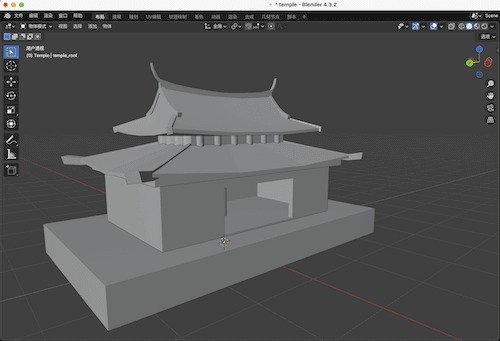
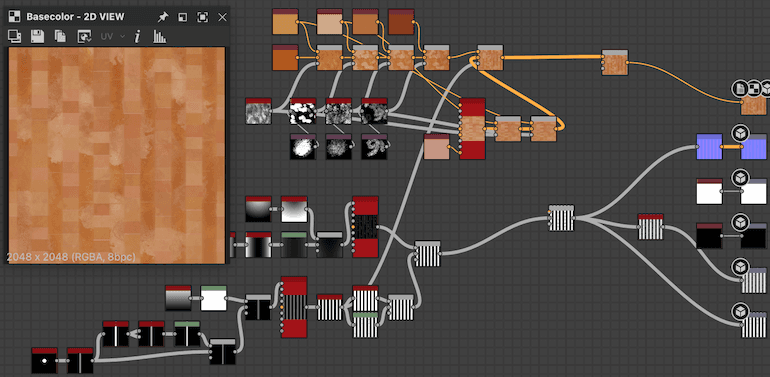
↳ modeled in Blender, textured in Substance Designer
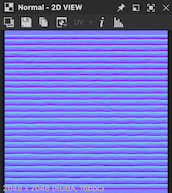
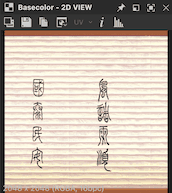
↳ supplemental textures
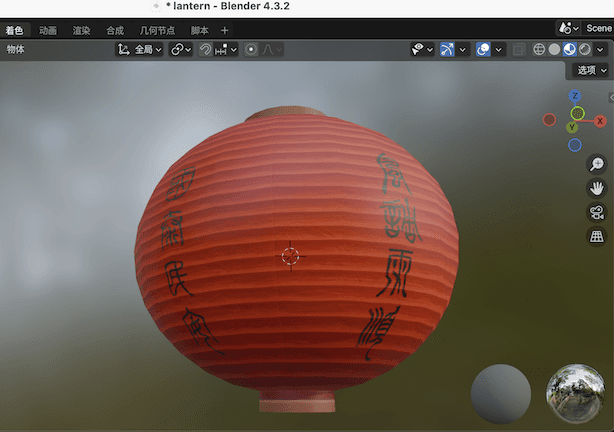
↳ 1st version lantern was red
⇲ Lantern
Last winter, I visited many temples in Taiwan, and many of them would hang a sea of red lanterns, which left a deep impression on me. However, after considering cultural customs, I decided to make them white instead, to better align with the sorrowful theme of the underworld.

↳ white ver. textures with custom shader
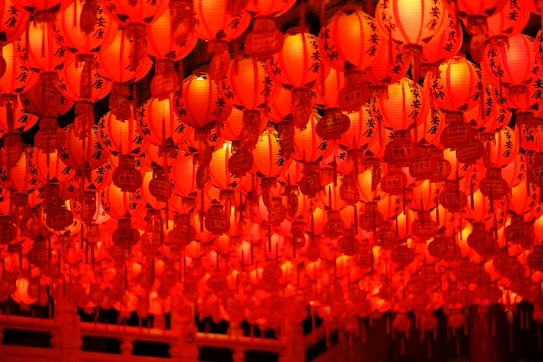

↳ taken in Kaohsiung


↳ coffin boat
⇲ Coffin Boat
For the boat, I was reminded of the “boat coffins” I saw at the Chengdu Museum in my hometown. The museum referred to them as “boats for the afterlife,” which I found quite poetic. Followed by their appearance and dimensions, I created a model of the boat and used Niagara to create smoke/flame-like effects surrounding it.
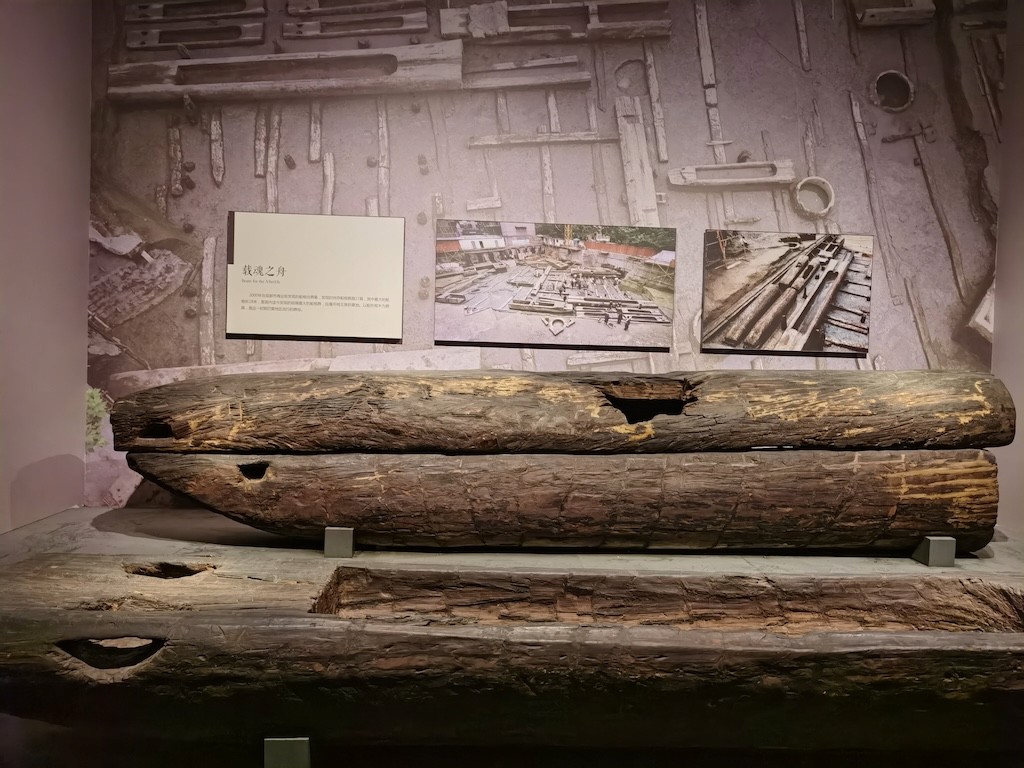
↳ taken in Chengdu Museum
⇲ Lantern Revise
After receiving feedback from my instructor, I turned off the rim protrusion and trembling outlines on the lanterns in some shots, as they were sometimes too distracting. Instead, I added Niagara generated particles to give them a soft glowing effect. Additionally, I added a LocalFogVolume to them, working in conjunction with the depth of field blurring effect for distant views.
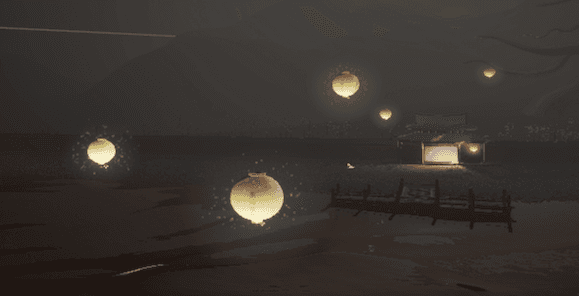

↳ the LocalFogVolume visible from a certain distance
⇲ Reflection
Four weeks felt incredibly short, and there are still many ideas I wasn’t able to fully realize. There are plenty of areas I’d like to improve, such as lighting, the sky sphere, the shader, and issues with Lumen shadows…
This was my first Unreal Engine project, and there was so much to learn. I’m happy with how much I’ve absorbed about real-time workflows. It’s really different from traditional processes. What I love most is the flexibility—being able to go back and forth. Even when the level sequence and shots were settled, I could still make adjustments to earlier elements, which made the entire process feel dynamic and reversible.
FAB has been an invaluable resource. There are so many high-quality free assets available, and the licensing is very generous. Even when I didn’t directly use the assets, exploring the project files taught me a lot about constructing scenes.
I will definitely continue developing this project, as I have many more concepts for the scene that I wish I could explore.

⇲ External Assets Used
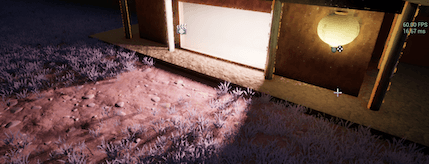
↳ supplemental textures from FreeStylized
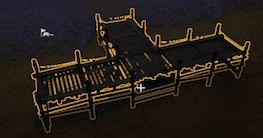
↳ from “Wooden props environment pack”
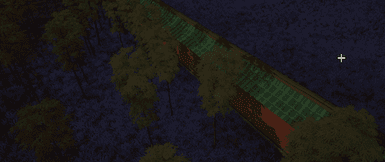
↳ fence, bamboo, and grass from “Stylized Eastern Village”
⇢The End
⇢Tom's Journal
⇢Mar 2025
Real-Time Studio
Individual coursework for Real-Time Studio. UE5 'Netherworld' Diorama.
Instructor: Nicole Mather
"When there's no one left in the living world who remembers you, you disappear from this world. We call it the final death." Pixar's Coco beautifully visualized this haunting concept of existential erasure through its vibrant Land of the Dead.
Inspired by this philosophy of memory-as-existence and rooted in Chinese underworld mythology, my UE5 diorama seeks to visualize the liminal space where newly departed souls first confront their post-mortem reality – what folklore describes as the "boundary station between yang and yin”.
↳ mood board (photographs taken by myself)
⇲ Theme: Fantasy / Mystery
A mysterious yet not overly eerie environment, depicting the “first stop in the underworld” where the protagonist arrives after death, partially based on Chinese folklore.
↳ sketch
⇲ Scene Element
‣ A vast water body shrouded in mist
‣ Floating coffin boats carrying spirits
‣ Floating lanterns
‣ A mysterious temple on the distant land
‣ A towering, ancient, and twisted tree
‣ Scattered, withering foliage
‣ Faintly visible mountains in the distance
↳ early stage test scenes
⇲ Early Stage Test Scene
Starting week 3, I began continuously hunting for relevant assets on FAB (e.g., SICKA DYNASTY, Wooden Props Environment Pack) and Quixel Megascans. I also set up some test scenes, but none of them felt quite right. Some were too realistic, while others were too generic.
What I knew I wanted was a more bizarre, dreamlike environment—something that didn’t feel like it belonged to our world, a scene that flickered and shimmered with an almost unreal, ethereal quality. Therefore, I decided to experiment with custom materials in UE to create a visual style that was both strange and captivating. My goal was to make the textures feel otherworldly, flickering like flames, and elusive.
↳ from Gabriel de Laubier’s blog
↳ avoiding new draw calls by adding instanced static meshes using blueprint
⇲ Stylized Paint Stroke Shader
After exploring numerous tutorials online, I stumbled upon the Stylized Paint Shader by Gabriel de Laubier. Its final look immediately caught my attention. Following the author’s breakdown blog, I recreated this custom shader in UE, added a trembling effect to the rim protrusion and outlines, and made it capable of lerping between paint strokes and additional textures.
It took me a few days to fully understand it, but through the process, I learned a lot about materials and blueprints in Unreal Engine.
↳ custom shader
⇲ Temple
Besides using assets from FAB, I also modeled and created materials for some of my own assets, specifically the lantern, temple, boat, and the tree. This allowed me to add more personal touches to the scene and better align with the overall atmosphere I was aiming for.
↳ modeled in Blender, textured in Substance Designer
↳ supplemental textures
↳ 1st version lantern was red
⇲ Lantern
Last winter, I visited many temples in Taiwan, and many of them would hang a sea of red lanterns, which left a deep impression on me. However, after considering cultural customs, I decided to make them white instead, to better align with the sorrowful theme of the underworld.
↳ white ver. textures with custom shader
↳ taken in Kaohsiung
↳ coffin boat
⇲ Coffin Boat
For the boat, I was reminded of the “boat coffins” I saw at the Chengdu Museum in my hometown. The museum referred to them as “boats for the afterlife,” which I found quite poetic. Followed by their appearance and dimensions, I created a model of the boat and used Niagara to create smoke/flame-like effects surrounding it.
↳ taken in Chengdu Museum
⇲ Lantern Revise
After receiving feedback from my instructor, I turned off the rim protrusion and trembling outlines on the lanterns in some shots, as they were sometimes too distracting. Instead, I added Niagara generated particles to give them a soft glowing effect. Additionally, I added a LocalFogVolume to them, working in conjunction with the depth of field blurring effect for distant views.
↳ the LocalFogVolume visible from a certain distance
⇲ Reflection
Four weeks felt incredibly short, and there are still many ideas I wasn’t able to fully realize. There are plenty of areas I’d like to improve, such as lighting, the sky sphere, the shader, and issues with Lumen shadows…
This was my first Unreal Engine project, and there was so much to learn. I’m happy with how much I’ve absorbed about real-time workflows. It’s really different from traditional processes. What I love most is the flexibility—being able to go back and forth. Even when the level sequence and shots were settled, I could still make adjustments to earlier elements, which made the entire process feel dynamic and reversible.
FAB has been an invaluable resource. There are so many high-quality free assets available, and the licensing is very generous. Even when I didn’t directly use the assets, exploring the project files taught me a lot about constructing scenes.
I will definitely continue developing this project, as I have many more concepts for the scene that I wish I could explore.
⇲ External Assets Used
↳ supplemental textures from FreeStylized
↳ from “Wooden props environment pack”
↳ fence, bamboo, and grass from “Stylized Eastern Village”
⇢The End
⇢Tom's Journal
⇢Mar 2025
⇢swipe or scroll⇢