Animation Studio
Individual coursework for Animation Studio.
Includes excerpt from The Cat Concerto (1947), directed by Hanna & Barbera. © MGM. (for educational purposes only)
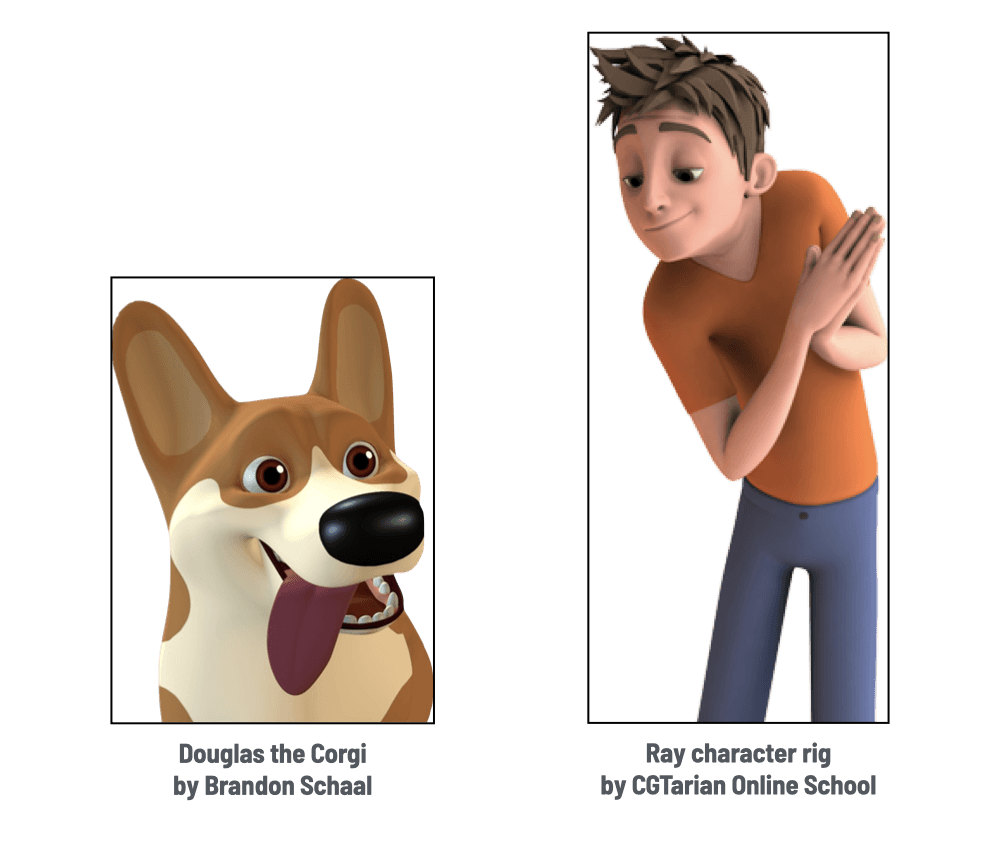
Rigs: Douglas the Corgi rig by Brandon Schaal, and Ray rig by CGTarian Online School.
Music: Flight of the Bumblebee (arr. Rachmaninoff), performed by Rousseau.
Instructor: Melody Li
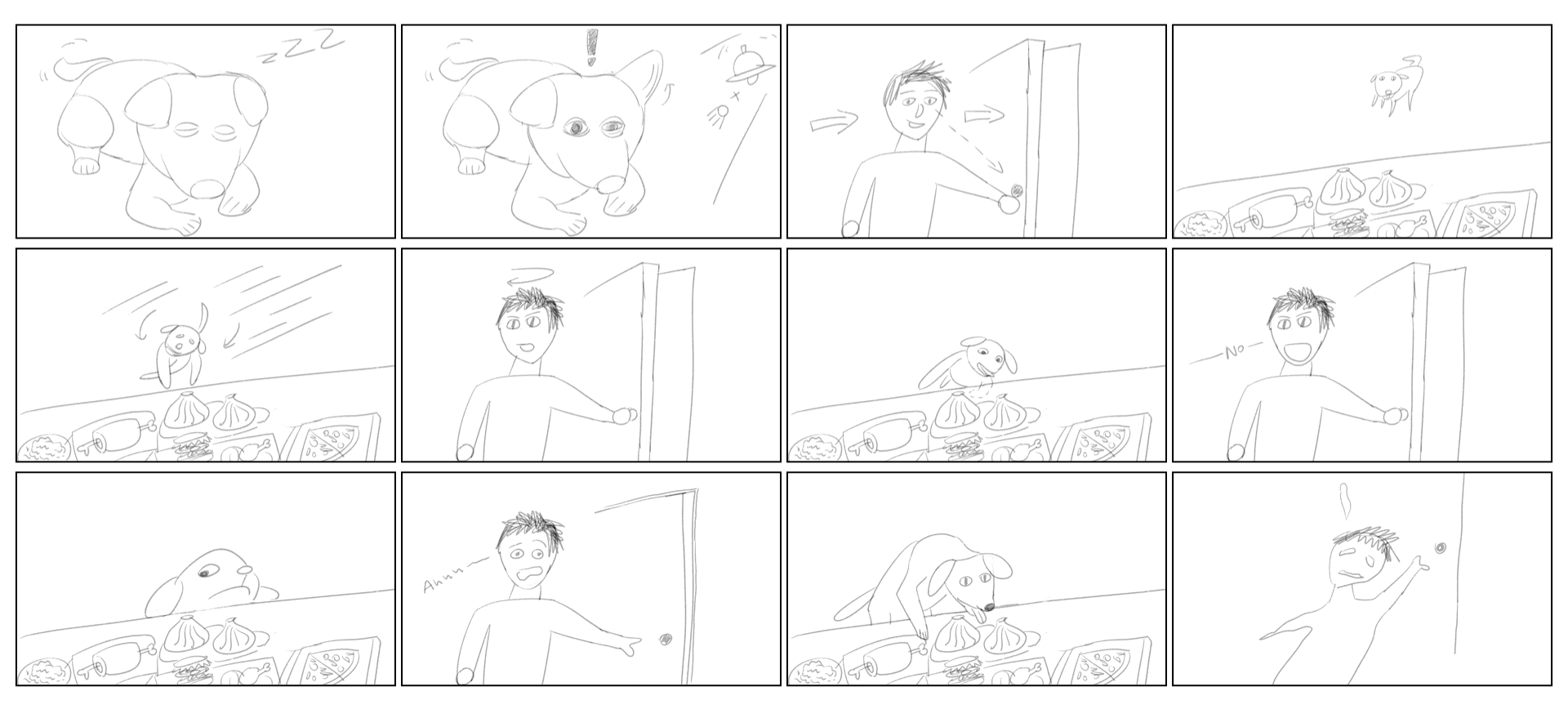
I’ve always wanted to create a dog animation. After confirming with Melody that it was okay to animate animal characters, I started developing the concept, and created a mood board and storyboard.
⇲ Storyboard
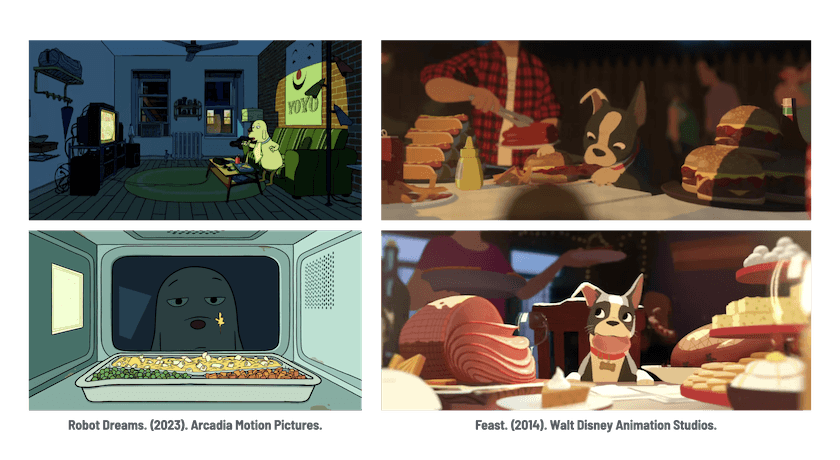
⇲ Mood Board
⇲ Characteristics
→ Ray
The Solitary Gourmet
At the age of five, stood under a magic tree and swore eternal loyalty to food—forever bound, never to betray. If broken, may all meals turn to ash, may every bite turn to dust, and may hunger haunt for eternity.
Has a cleanliness obsession
→ Douglas
Professional Food Thief
Born with an unshakable belief that all food belongs to him by divine right. Will stare into your soul until you surrender your meal—or mysteriously “acquire” it when you blink.
Certified Destruction Expert since birth
⇲ Dialogue
→ (Doorbell ringing)
→ Ray - “Coming!”
→ (Douglas running)
→ Ray - “Nooooo…”
→ Ray - “Errrrr…”
→ (Douglas eating)
⇲ Rig Used
As this course focused on learning animation in Maya, I chose to work with these two rigs:
Douglas the Corgi rig by Brandon Schaal, and Ray character rig by CGTarian Online School.
⇲ Production Phase
This project marked my first time creating an animated short from start to finish, and the experience was incredibly fulfilling. I found the process both enjoyable and educational, and through consistent feedback from my instructor and classmates, I was able to refine my work iteratively and gain valuable hands-on experience.
I began by modeling the environment based on the concepts I laid out earlier. Inspired by the film Robot Dreams, I designed a setting reminiscent of an old New York apartment with dim lighting and a relaxed tone. The dim ambiance allowed me to simplify the modeling and texturing process, which I completed in Blender within an afternoon. This foundational setup helped establish the spatial layout and blocking for the animation.
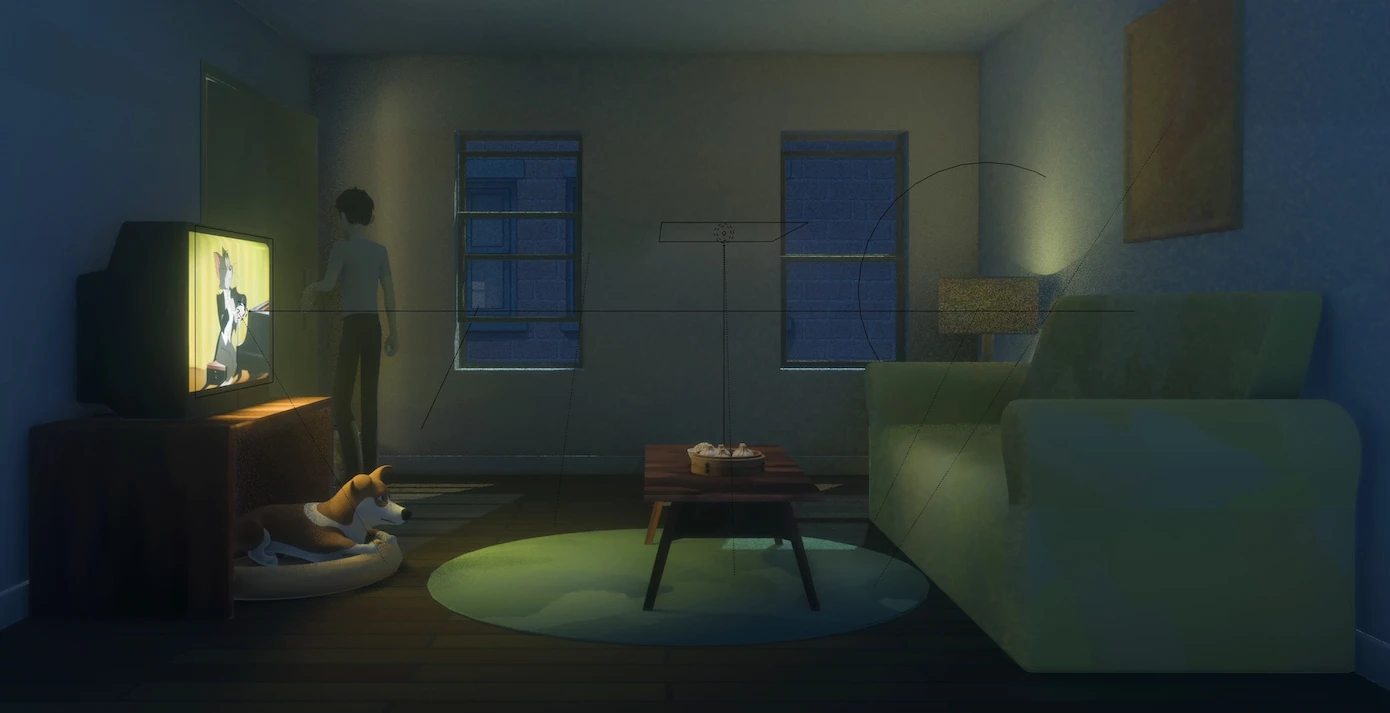
↳ the scene
While I was building the room, I stumbled upon the animated logo of The Animator’s Survival Kit. The exaggerated and expressive entrance of the dachshund instantly captivated me. (Even though I was working with a corgi rig :) I was inspired not just to replicate it, but to push it further — animating the room itself stretching along with the dog for a funny, elastic effect.
I split the environment into “Room Front” and “Room Back,” separating the walls and floor to allow for this stretch. This surreal transformation became one of the defining visual elements of my piece.
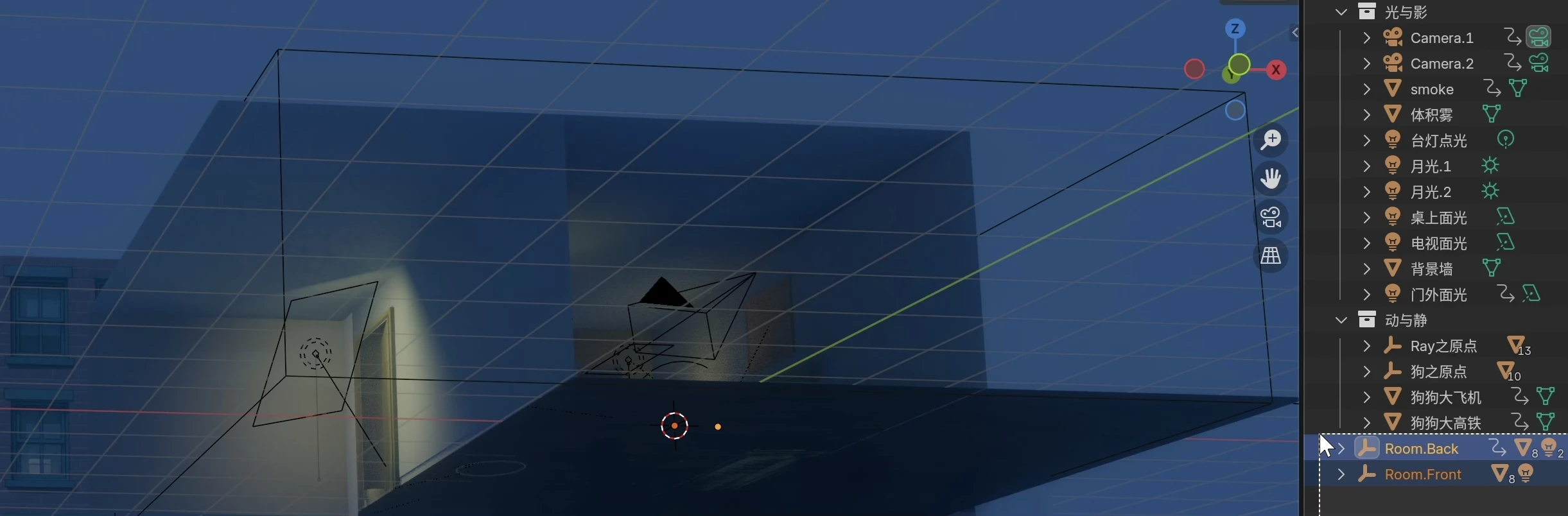
↳ stretchable room
As the room included a TV, I initially considered animating a short clip to play within it. My idea was to have a TV character react to the mid-air dog with a shocked expression. However, due to time constraints, I instead synced a classic Tom and Jerry piano-playing scene to Rimsky-Korsakov’s “Flight of the Bumblebee”, which complemented the chaotic energy of the main animation. The audio I used is from Rousseau’s performance, Rachmaninoff arrangement.
In terms of the animation, three aspects of this project stood out to me the most. First, animating the “stretching dachshund” sequence was the most labor-intensive part. I directly used the 2D logo clip as the reference, adjusting the dog’s limbs almost frame by frame for about 70 keyframes.
Also, since the rig itself wasn’t built for such extreme deformations, I used blend-shaped lattices to dynamically manipulate the dog’s body shape. It is also used for exaggerating the stretch and squash movement when the dog stands up.
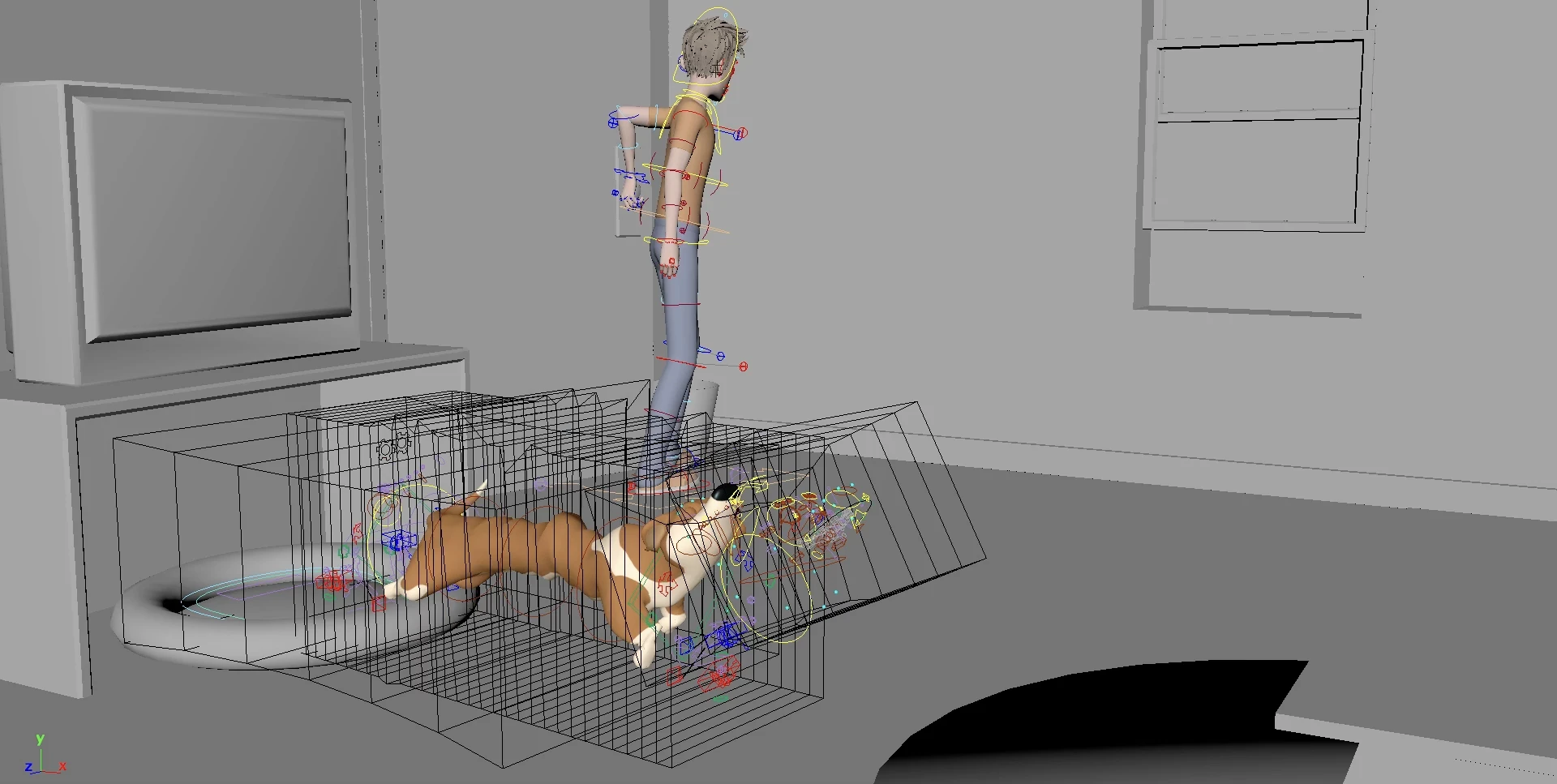
↳ blend-shaped lattices
Second, I learned an important lesson from animating based on reference footage. Initially, I followed every pose from the source blindly, but something about the dog’s mid-air leg crossing felt unnatural. During our work-in-progress showcase, Melody pointed out that the movement there should resemble the dog digging or scrambling.
I suddenly realized that the original reference clip (super adorable) I found on Instagram featured a golden retriever turning sharply and slipping, which didn’t translate well in my animation context. This taught me the importance of interpreting – to avoid creating counter-intuitive and counter-physics animation.
Third, I unexpectedly enjoyed animating the dog’s ears. My original plan to use Maya’s jiggle deformer failed and I thought I’d have to animate the ears manually, which I assumed would be tedious.
However, once I got started, I realized that the dog’s ears (and tail) were actually perfect for practicing follow-through movements. Just like we did in class, by offsetting the keyframes of the ear controllers at the tips by n × 3 or 4 frames, it elegantly achieved a stunning effect. This part turned out to be surprisingly fun and became one of my favorite elements to animate.
Another minor but useful discovery was the effectiveness of motion trails. While adjusting the dog’s final jump onto the table — a scene involving many controllers — the visual feedback from the motion trails made it much easier to refine the movement arcs.
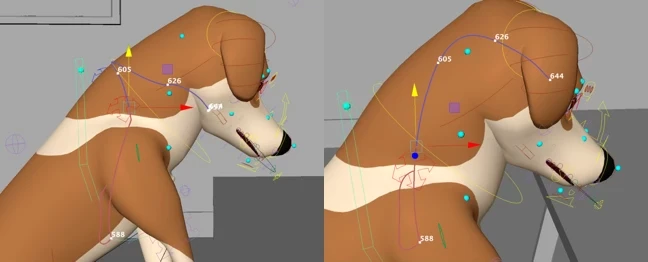
↳ motion trails
For rendering and post-production, I relied on a pipeline I’d used in Industry Studio: animating in Maya and rendering in Blender, which saved me a lot of time. The sound and music were also quite simplified given the limited time.
In conclusion, this project was a rich learning experience. Iteratively refining the animation based on feedback helped me internalize animation principles. More importantly, I truly enjoyed the whole process. It reaffirmed for me that this is the kind of work I want to pursue in the future.
⇢The End
⇢Tom's Journal
⇢Apr 2025
Animation Studio
Individual coursework for Animation Studio.
Includes excerpt from The Cat Concerto (1947), directed by Hanna & Barbera. © MGM. (for educational purposes only)
Rigs: Douglas the Corgi rig by Brandon Schaal, and Ray rig by CGTarian Online School.
Music: Flight of the Bumblebee (arr. Rachmaninoff), performed by Rousseau.
Instructor: Melody Li
I’ve always wanted to create a dog animation. After confirming with Melody that it was okay to animate animal characters, I started developing the concept, and created a mood board and storyboard.
⇲ Storyboard
⇲ Mood Board
⇲ Characteristics
→ Ray
The Solitary Gourmet
At the age of five, stood under a magic tree and swore eternal loyalty to food—forever bound, never to betray. If broken, may all meals turn to ash, may every bite turn to dust, and may hunger haunt for eternity.
Has a cleanliness obsession
→ Douglas
Professional Food Thief
Born with an unshakable belief that all food belongs to him by divine right. Will stare into your soul until you surrender your meal—or mysteriously “acquire” it when you blink.
Certified Destruction Expert since birth
⇲ Dialogue
→ (Doorbell ringing)
→ Ray - “Coming!”
→ (Douglas running)
→ Ray - “Nooooo…”
→ Ray - “Errrrr…”
→ (Douglas eating)
⇲ Rig Used
As this course focused on learning animation in Maya, I chose to work with these two rigs:
Douglas the Corgi rig by Brandon Schaal, and Ray character rig by CGTarian Online School.
⇲ Production Phase
This project marked my first time creating an animated short from start to finish, and the experience was incredibly fulfilling. I found the process both enjoyable and educational, and through consistent feedback from my instructor and classmates, I was able to refine my work iteratively and gain valuable hands-on experience.
I began by modeling the environment based on the concepts I laid out earlier. Inspired by the film Robot Dreams, I designed a setting reminiscent of an old New York apartment with dim lighting and a relaxed tone. The dim ambiance allowed me to simplify the modeling and texturing process, which I completed in Blender within an afternoon. This foundational setup helped establish the spatial layout and blocking for the animation.
↳ the scene
While I was building the room, I stumbled upon the animated logo of The Animator’s Survival Kit. The exaggerated and expressive entrance of the dachshund instantly captivated me. (Even though I was working with a corgi rig :) I was inspired not just to replicate it, but to push it further — animating the room itself stretching along with the dog for a funny, elastic effect.
I split the environment into “Room Front” and “Room Back,” separating the walls and floor to allow for this stretch. This surreal transformation became one of the defining visual elements of my piece.
↳ stretchable room
As the room included a TV, I initially considered animating a short clip to play within it. My idea was to have a TV character react to the mid-air dog with a shocked expression. However, due to time constraints, I instead synced a classic Tom and Jerry piano-playing scene to Rimsky-Korsakov’s “Flight of the Bumblebee”, which complemented the chaotic energy of the main animation. The audio I used is from Rousseau’s performance, Rachmaninoff arrangement.
In terms of the animation, three aspects of this project stood out to me the most. First, animating the “stretching dachshund” sequence was the most labor-intensive part. I directly used the 2D logo clip as the reference, adjusting the dog’s limbs almost frame by frame for about 70 keyframes.
Also, since the rig itself wasn’t built for such extreme deformations, I used blend-shaped lattices to dynamically manipulate the dog’s body shape. It is also used for exaggerating the stretch and squash movement when the dog stands up.
↳ blend-shaped lattices
Second, I learned an important lesson from animating based on reference footage. Initially, I followed every pose from the source blindly, but something about the dog’s mid-air leg crossing felt unnatural. During our work-in-progress showcase, Melody pointed out that the movement there should resemble the dog digging or scrambling.
I suddenly realized that the original reference clip (super adorable) I found on Instagram featured a golden retriever turning sharply and slipping, which didn’t translate well in my animation context. This taught me the importance of interpreting – to avoid creating counter-intuitive and counter-physics animation.
Third, I unexpectedly enjoyed animating the dog’s ears. My original plan to use Maya’s jiggle deformer failed and I thought I’d have to animate the ears manually, which I assumed would be tedious.
However, once I got started, I realized that the dog’s ears (and tail) were actually perfect for practicing follow-through movements. Just like we did in class, by offsetting the keyframes of the ear controllers at the tips by n × 3 or 4 frames, it elegantly achieved a stunning effect. This part turned out to be surprisingly fun and became one of my favorite elements to animate.
Another minor but useful discovery was the effectiveness of motion trails. While adjusting the dog’s final jump onto the table — a scene involving many controllers — the visual feedback from the motion trails made it much easier to refine the movement arcs.
↳ motion trails
For rendering and post-production, I relied on a pipeline I’d used in Industry Studio: animating in Maya and rendering in Blender, which saved me a lot of time. The sound and music were also quite simplified given the limited time.
In conclusion, this project was a rich learning experience. Iteratively refining the animation based on feedback helped me internalize animation principles. More importantly, I truly enjoyed the whole process. It reaffirmed for me that this is the kind of work I want to pursue in the future.
⇢The End
⇢Tom's Journal
⇢Apr 2025
⇢swipe or scroll⇢